



Special Education Services
This section provides information to help families understand and navigate special education services. These start with preschool (ages 3 to 5), continue through K-12 (ages 5 to 18) and transition services (up to age 22).
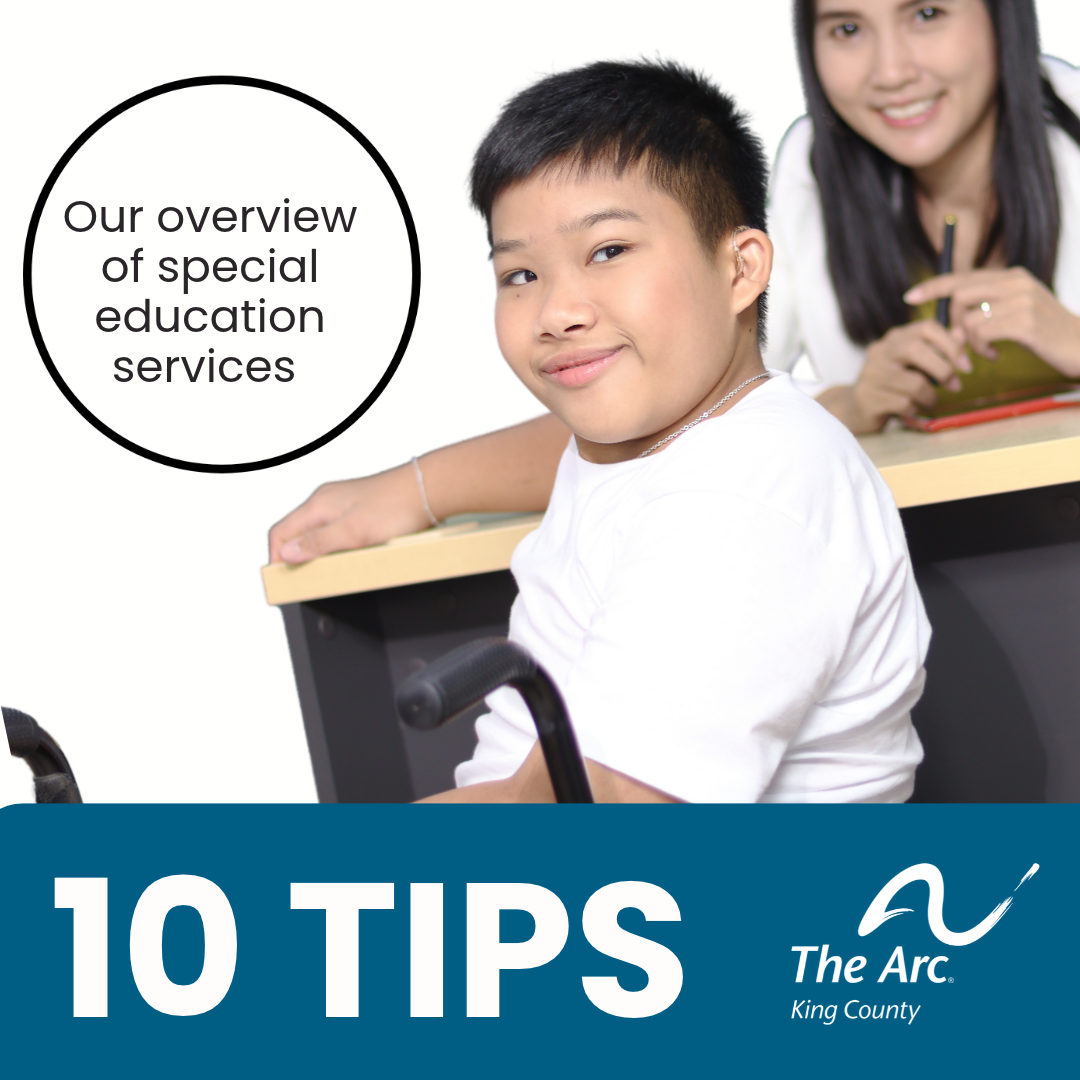
This resource covers the basics all families should be familiar with.
Special education services are tailored learning supports and related services. They are outlined in an Individualized Education Program (IEP) and are available to eligible children.
- Students must qualify under at least one of 13 categories, and require individualized support to access general education.
- Students receiving special education services have a right to a free and appropriate public education (FAPE) in the least restrictive environment (LRE).
- Parents have a right to meaningful participation in the development of the IEP and are a member of the IEP team.
Student rights: Under Section 504 of the Rehabilitation Act of 1973, all students with disabilities have the right to equal access to education opportunities and to a free and appropriate public education. Under Title II of the Americans with Disabilities Act, all students with disabilities have an equal opportunity to benefit from state and local programs, this includes school districts.
Students have these civil rights regardless of whether they also receive special education services.
Resource list
General guidance - The Arc of King County
- 10 Tips - an overview of special education
- A Parents' Guide to Inclusive Learning
- College Considerations for People with Disabilities
- Early Learning for Children with Disabilities
- Evaluation reports - Meaningful parent participation (2026)
- Overview of Children’s Services
- Preparing for School Meetings
- Restraint and isolation - New restrictions (2026)
- Right to Inclusive Learning
- Special Education Resource List
- Supporting Inclusive Learning - A collection of webinars and resources for families and educators. Developed for the Inclusionary Practices Technical Network (IPTN)
- Transition to Adulthood
Please also see:
State resources to support inclusive learning
- Comprehensive Inclusive Education - A 4-step process to writing inclusive IEPs (OSPI)
- Extended Myths & Facts about Inclusionary Practices in Washington State (OSPI)
- Inclusionary Practices Technical Resource Center (OSPI)
- Positive Behavior Supports for Resilient & Inclusive Schools (OSPI)
- Reaching Every Learner - Supporting students with cognitive disabilities to learn and make progress in grade level standards (OSPI)
Resources from The Arc - United States
- The Arc@School AI Advisor - A free AI-powered assistant trained by The Arc and other experts.
- The Arc@School - An overview of the Individuals with Disabilities Education Act (IDEA) and link to curriculum
- Supporting Spanish-Speaking Families as They Learn About Special Education (Webinar)
Community resources
- Basic Education Rights and Opportunities in Public School
- Discipline in Schools (WA Education Ombuds)
- Dispute Resolution from Office of Superintendent of Public Instruction (OSPI)
- Family Engagement and Guidance (OSPI)
- How to be an Education Advocate (WA Education Ombuds)
- How to File a Discrimination Complaint with the Office of Civil Rights (US Dept of Education)
- Least Restrictive Environment - Council of Parent Attorneys and Advocates
- NW Justice Project Special Ed legal clinics
- TIES Belonging Resources | Creating communities of belonging for students with significant cognitive disabilities | Institute on Community Integration Publications
- What is Special Education? - Understood.org
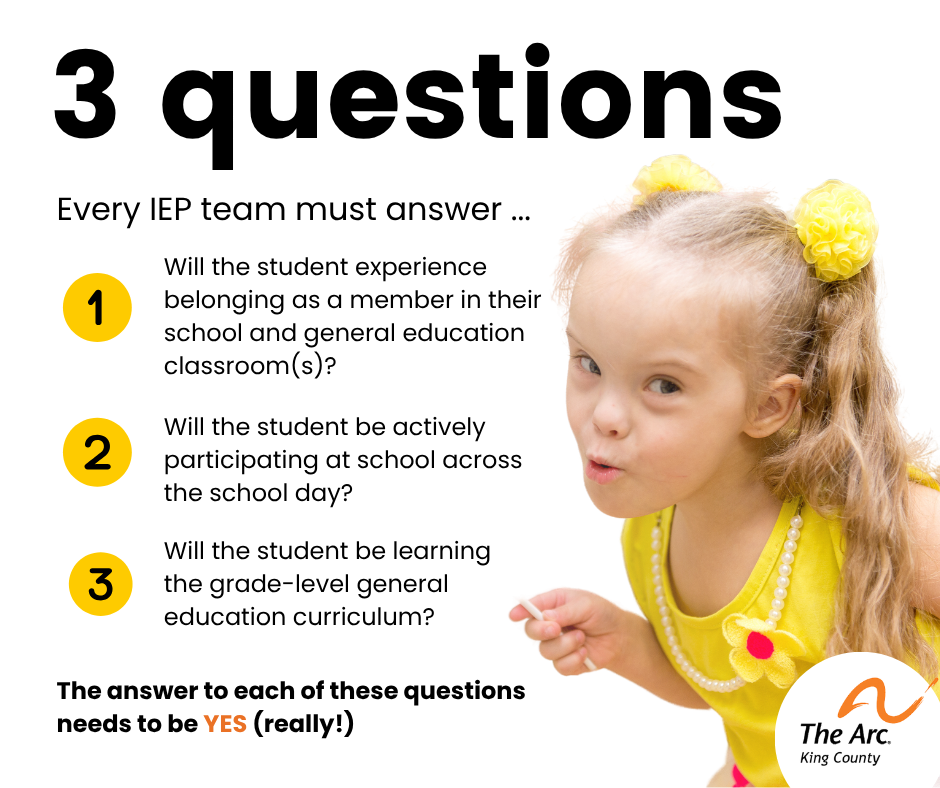
This resource helps ensure IEPs provide access to learning standards and support student belonging and participation.