




Supporting Inclusive Learning
All students belong: Our Spring 2025 series
The Arc of King County’s Inclusive Learning series was created by people with lived experience, family members, and community allies to support students with intellectual and developmental disabilities and Black students with disabilities.
There are 14 courses in all, 3 in Spanish, that explore understanding disability, tips to work with families, and support for families navigating schools.
These classes were produced as part of the Family Engagement Collaborative for the state’s Inclusionary Practices Technical Network (IPTN).
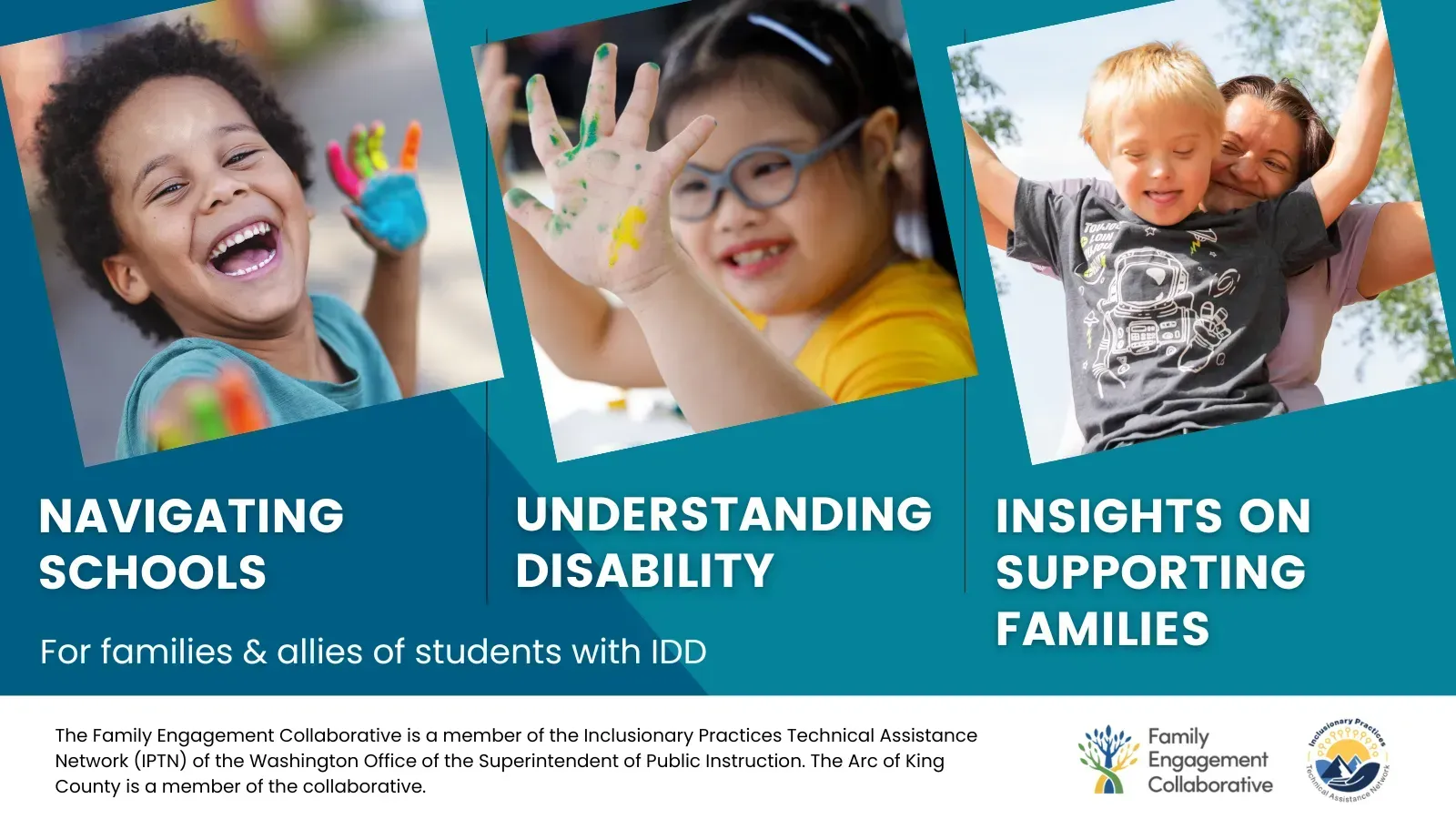
Navigating Schools: For families
WebinarsThis series covers the basics of special education services, the benefits of inclusive learning, and the legal right to accessible and integrated settings in school and other public programs.
Understanding Disability
WebinarsHow much do you know about intellectual or other developmental disabilities (IDDs)? This series explores how biases impact the way we treat people with IDD and looks into two of the more common conditions.
Insights on Supporting Families
WebinarsA central part of the Individuals with Disabilities Education Act (IDEA) is that families have insight to offer and a role on the IEP team. This series shares what families may be experiencing and offers tips for working together productively.
The missing manual
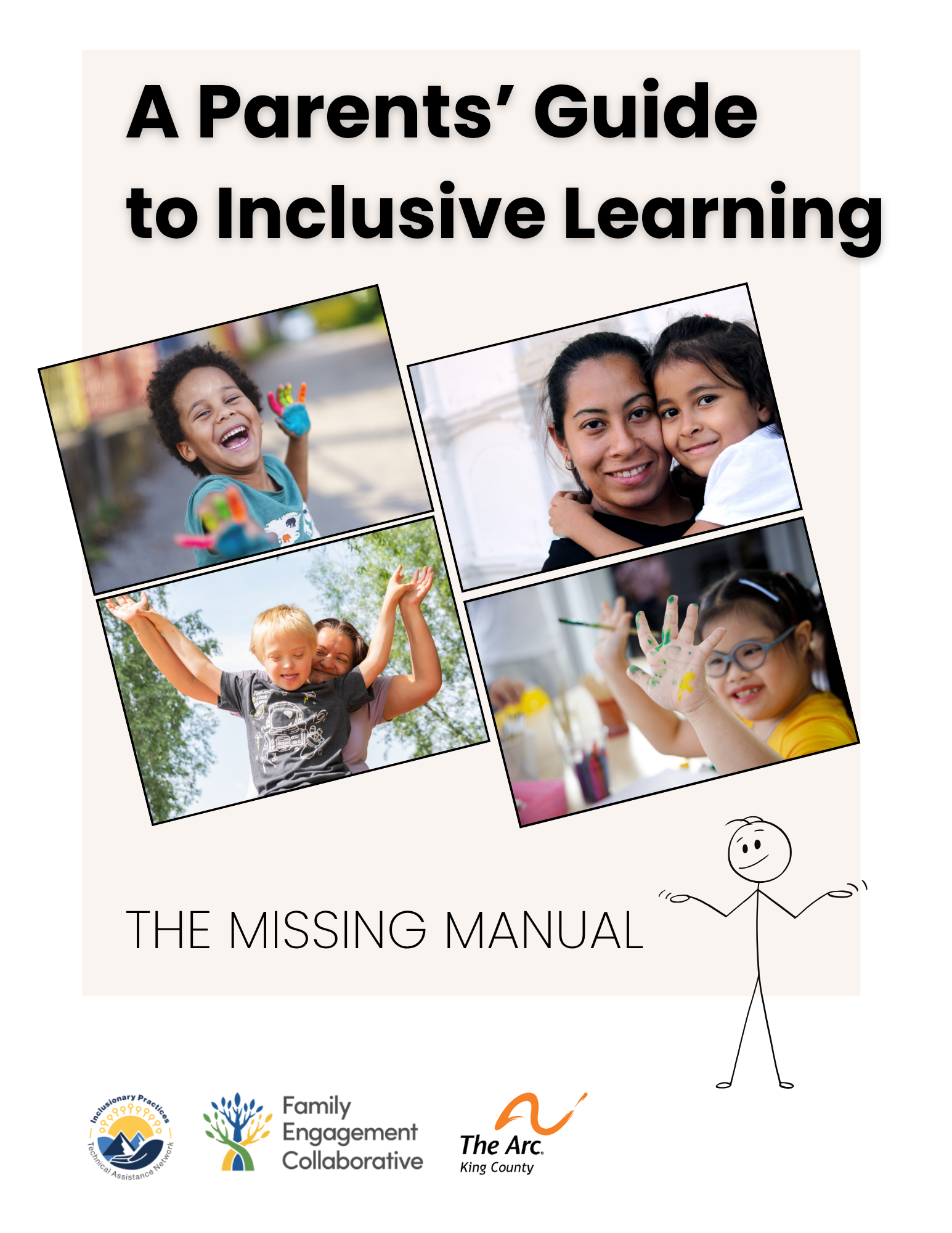
"They aren't ready for us" and “I wish I had known ...” are statements we hear often. Our Parent's Guide to Inclusive Learning covers the topics that parents often find themselves navigating while advocating for their loved ones.
We cover:
- Belonging and well-being
- Inclusion
- Disability as diversity: Rights & justice
- The legal basis for inclusion
Universal design for learning and multi-tiered systems of support
- The heart of the matter (person-centered)
- Big, complex behavior
- Special education basics
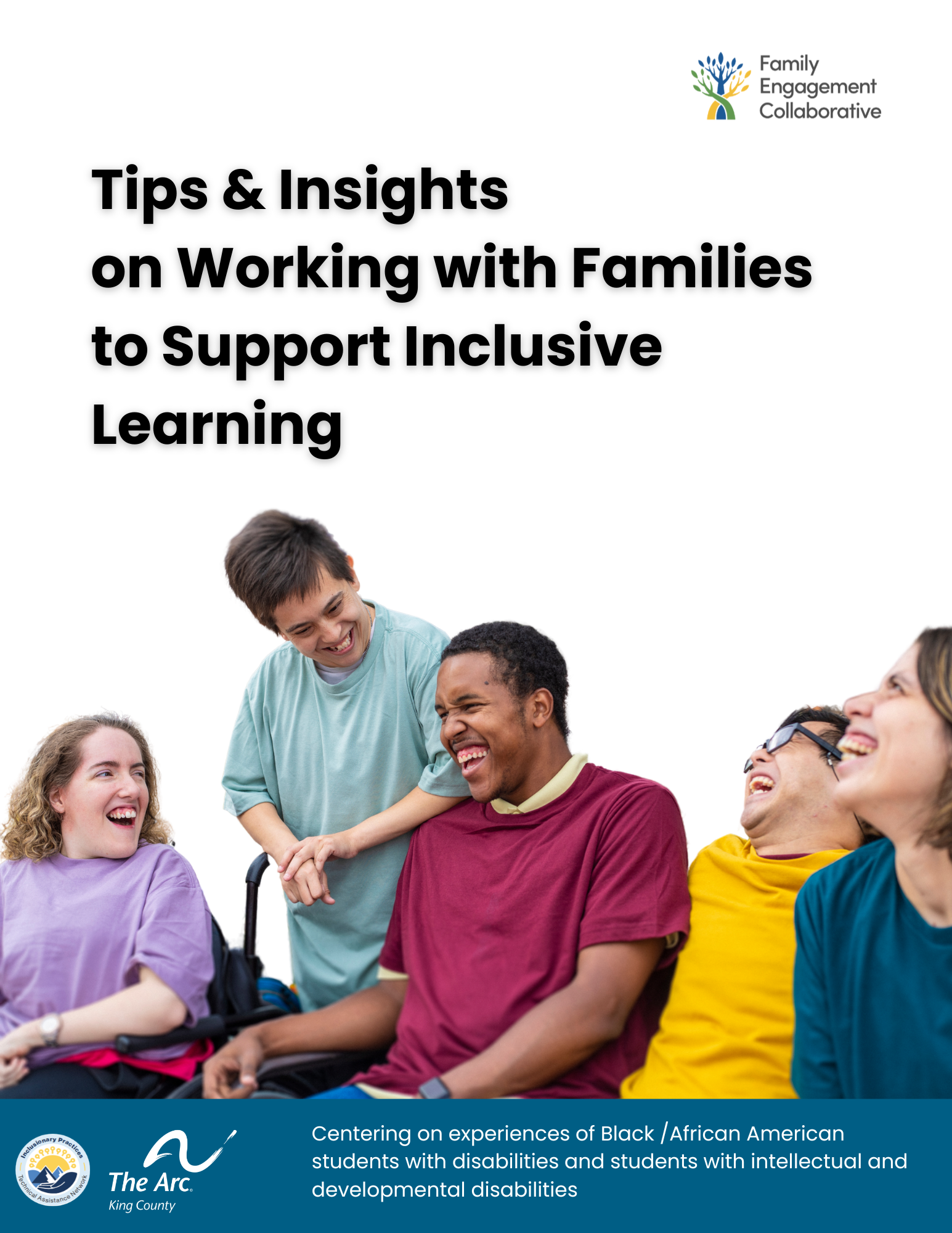
Insights on working with families
Ableism and racism affect quality of life. When combined the effect is magnified.
If a school's culture does not prioritize the needs of Black, indigenous, or other youth of color - or fails to respond to the needs of people with developmental disabilities - it leads to lifelong disparities. In Tips & Insights on Working with Families to Support Inclusive Learning, we offer strategies and parent voice, along with research links so to you can learn more about how race and disability intersect.
Why we joined this effort
Historically, Washington has been one of the least inclusive states for students with disabilities. In recent years that has shifted, but not for everyone.
In the 2023-24 school year:
- 9% of students with intellectual disabilities were in the general education setting for 80% or more during the day. In some districts that was as low as 2%.
- For Black students with disabilities, the average is 53%.
- The average for all students with disabilities is 65%
The most frequently reported barriers, nationally, are attitudes and beliefs.
Bottom line, inclusive practices benefit the academic, social and emotional development of all children.
Extended Myths & Facts
DownloadThis resource was created by Washington's Office of the Superintendent of Public Instruction and the Ties Center
Creating Inclusive IEPs
DownloadThis guide gives IEP teams a step-by-step process to develop inclusive IEPs and promote equitable learning opportunities and post-school outcomes for students eligible for special education services.
Conversation Toolkit
Learn moreThe Community Conversation Toolkit helps families, educators, and community members discuss how to make schools welcoming and inclusive for all. It provides practical tools and guidance for facilitating meaningful conversations about inclusion, addressing barriers, and fostering a supportive school environment.
End Isolation & Reduce Restraint
Learn moreWe all benefit when educators have effective strategies to address challenging behaviors in the classroom. The Coalition to End Isolation and Reduce Restraint is working to ensure all children have the supports they need, when they need it.